
Our treatments

Every tooth deserves to be saved whenever possible

A natural tooth is precious. Even when it has been badly damaged by decay, a fracture or an infection, it is not necessarily lost. Root canal treatment can often eliminate the infection while preserving the tooth and its root. Before considering an extraction, we always carefully assess the options for saving your tooth, because nothing replaces a natural tooth as well when it can be maintained for the long term.
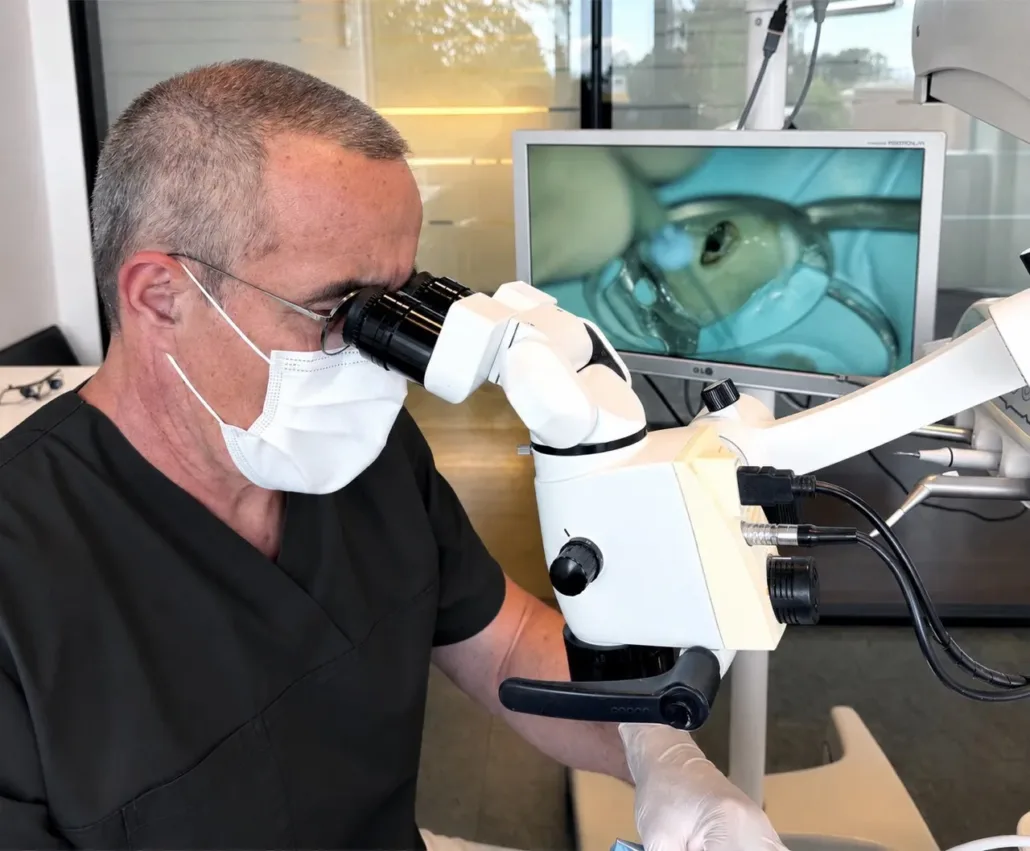
Seeing what the naked eye cannot

The success of root canal treatment depends on one essential detail: treating every canal in the tooth, including the finest and the most difficult to reach. The operating microscope reveals details invisible to the naked eye and considerably improves precision. This technical rigour, combined with our experience and state-of-the-art equipment, allows us to manage particularly delicate cases.

Everyday care to protect your teeth for the long term

To avoid the need for root canal treatment, prevention relies above all on thorough oral hygiene and regular check-ups.

Careful brushing, daily interdental cleaning, prompt attention to pain, persistent sensitivity or dental trauma, and early detection at check-ups
often make it possible to act before the damage spreads to the inside of the tooth.

Before / After

Invest in your smile

Aucun tarif trouvé pour ce soin.

How root canal treatment works

01 01

A consultation to establish the diagnosis and explain the treatment

Each treatment begins with a consultation, including a clinical examination and X-rays, to assess the condition of the tooth and determine whether root canal treatment is the best way to save it. During this appointment, you will receive all the information you need.

02 02

The first treatment appointment (which, if appropriate, can take place straight after the consultation)

During this appointment, after carefully anaesthetising the tooth so that the treatment is as comfortable as possible for you, the dentist will, depending on the situation, remove the nerve of the tooth and explore, clean and disinfect the root canal system. At this stage, the operating microscope allows particularly meticulous exploration and preparation of the root canals. At the end of the appointment, the dentist usually places a disinfecting paste in the canals and closes the tooth with a temporary filling. In some cases, the canals can be filled straight away, so that the root canal treatment is completed in a single appointment.

03 03

The second treatment appointment

A second appointment is scheduled once any symptoms have completely disappeared, during which the dentist fills the root canals. For the patient, it is similar to the first: the dentist disinfects the root canals once more, then seals them as tightly as possible. Here too, the operating microscope provides better visibility and greater control over each step. At the end of the appointment, a temporary filling is usually placed and a check-up X-ray is taken.

04 04

A solid restoration will help your tooth last

After root canal treatment, a restoration that provides strength and a tight seal is strongly recommended: a root-treated tooth is generally weakened, and its long-term success also depends on the quality of the restoration of the visible part of the tooth.

Key points to remember

✓ Preserving a natural tooth is often preferable to extracting it.
✓ The treatment is carried out under local anaesthetic for your comfort.
✓ The operating microscope provides greater precision in complex cases.
✓ A suitable restoration protects the tooth for the long term after treatment.

Onlays for more extensive damage

When a tooth is more severely weakened, a direct restoration does not always hold up well enough over time. A custom-made onlay may then be recommended. Made from composite or ceramic, it strengthens the tooth while preserving as much of the remaining healthy structure as possible.

Direct composite restorations

A direct restoration is indicated when the loss of tooth structure is moderate. It is an effective way to treat a cavity or a small fracture, often in a single appointment.

A minimally invasive approach whenever possible

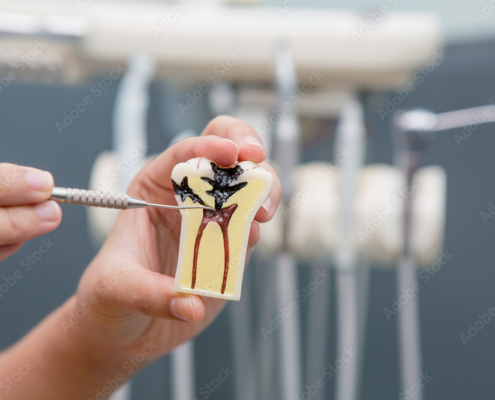
During root canal treatment, the dentist accesses the inside of the tooth to precisely remove the damaged or infected tissue in the pulp chamber and root canals.

The entire canal system is then meticulously disinfected. Finally, it is sealed with biocompatible materials to limit the risk of reinfection and help preserve the tooth for the long term.

At D1 Dental Concept, we use high-quality, Swiss-made endodontic instruments, recognised worldwide for their reliability. We also frequently use optical aids such as magnifying loupes or operating microscopes to ensure precise treatment.

Crowns and veneers

Some teeth are more severely damaged, whether by extensive decay, a fracture or long-standing wear. In such cases, a more complete restoration may be considered.

Root canal treatment

When decay progresses to the inside of the tooth and reaches the pulp, root canal treatment may become necessary. The aim is to treat the internal infection or inflammation so that the tooth can be saved rather than extracted.

Personalised care

Advice tailored
to your situation

At every appointment, our team assesses your interdental hygiene and
recommends the cleaning aids best suited to your anatomy.