Our treatments

Wisdom teeth

Wisdom teeth are the third molars, located at the very back of the dental arches. They usually erupt between the late teens and early adulthood.

Their removal may be recommended when they cause pain, infection, eruption problems or affect the neighbouring teeth.

The decision is always made on a case-by-case basis, according to the clinical situation and the risks to your oral health.
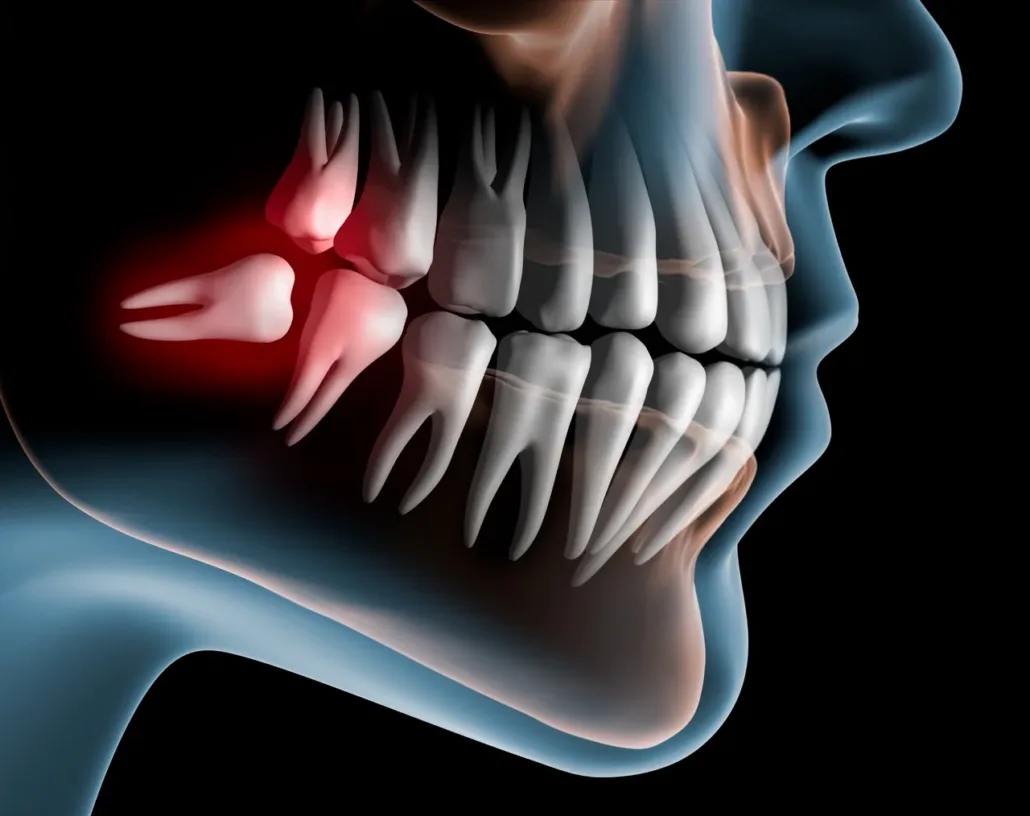
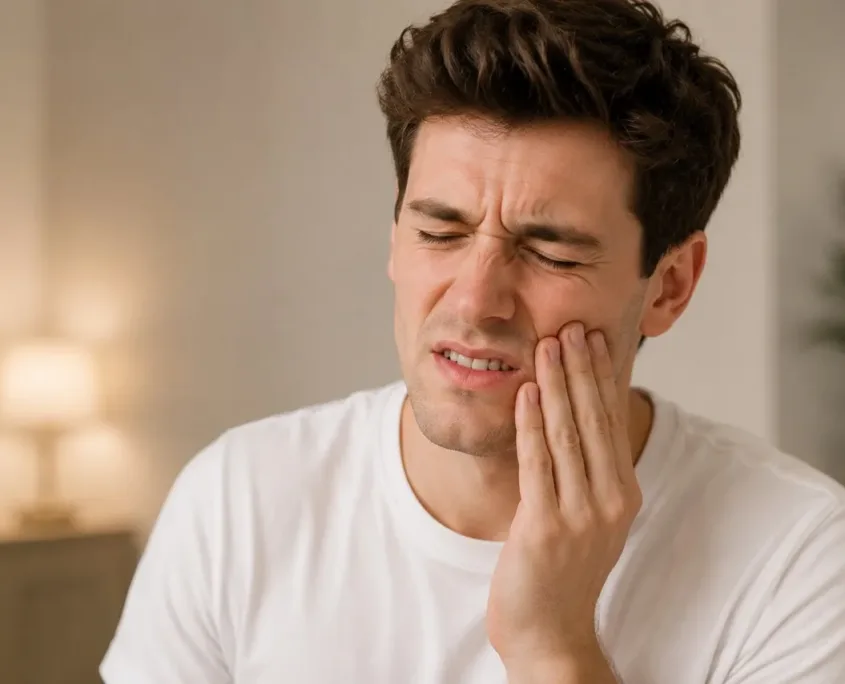
The main problems associated with wisdom teeth

When there is not enough room for them or they erupt at an angle, wisdom teeth can cause several complications. Regular dental check-ups help identify these problems early.

  • Inflammation and infection

    Pain, swelling and gum infections.

  • Tooth decay

    Difficult cleaning can lead to decay in the wisdom teeth and adjacent molars.

  • Damage to adjacent teeth

    Risk of damage to the adjacent molars.

  • Formation of cysts

    Rare risk of damage to the jawbone and adjacent teeth.

  • Pain and discomfort

    Discomfort when chewing and difficulty opening the mouth.

Invest in your smile

OPT Panoramic X-ray
CHF 175.-

For a general check-up, wisdom tooth extraction, orthodontic treatment

CHF 175.-
Surgical removal of an impacted or partially impacted tooth
CHF 300.- to 500.-

(wisdom tooth) with anaesthetic but without an X-ray

CHF 300.- to 500.-

When to see a dentist about your wisdom teeth

We recommend seeing a dentist about your wisdom teeth as soon as you notice:

  • pain,
  • gum inflammation,
  • discomfort when chewing, or
  • signs that they have not fully erupted.

Even without obvious symptoms, an assessment may be worthwhile when their position makes cleaning difficult or suggests a lack of space in the dental arch. A timely check-up helps to anticipate possible complications and to guide you towards measured, appropriate and reassuring care.

Advice from D1 Dental Concept

A wisdom tooth assessment is recommended between the ages of 18 and 20, even if you have no pain. D1 Dental Concept provides personalised follow-up care to help prevent complications and protect your oral health.

Treating tooth decay and restoring damaged teeth

When decay is detected before it reaches the pulp, the tooth can usually be restored conservatively. After the affected tissue has been removed, under local anaesthetic if necessary, the tooth is rebuilt with a suitable material, often a composite that closely matches the shade of the natural tooth.

This type of restoration gives you a functional, discreet tooth that blends in well with your smile, while limiting the loss of tooth structure.

Direct composite restorations

A direct restoration is indicated when the loss of tooth structure is moderate. It is an effective way to treat a cavity or a small fracture, often in a single appointment.

Onlays for more extensive damage

When a tooth is more severely weakened, a direct restoration does not always hold up well enough over time. A custom-made onlay may then be recommended. Made from composite or ceramic, it strengthens the tooth while preserving as much of the remaining healthy structure as possible.

A minimally invasive approach whenever possible

The priority is not to “do more”, but to do what is right.
Whenever the situation allows, we favour a minimally invasive approach to preserve as much natural tooth tissue as possible and limit treatment to what is strictly necessary.

This philosophy is particularly important in restorative dentistry: it allows effective treatment while preserving the tooth for the long term.

Crowns and veneers

Some teeth are more severely damaged, whether by extensive decay, a fracture or long-standing wear. In such cases, a more complete restoration may be considered.

Root canal treatment

When decay progresses to the inside of the tooth and reaches the pulp, root canal treatment may become necessary. The aim is to treat the internal infection or inflammation so that the tooth can be saved rather than extracted.

Personalised care

Advice tailored
to your situation

At every appointment, our team assesses your interdental hygiene and
recommends the cleaning aids best suited to your anatomy.